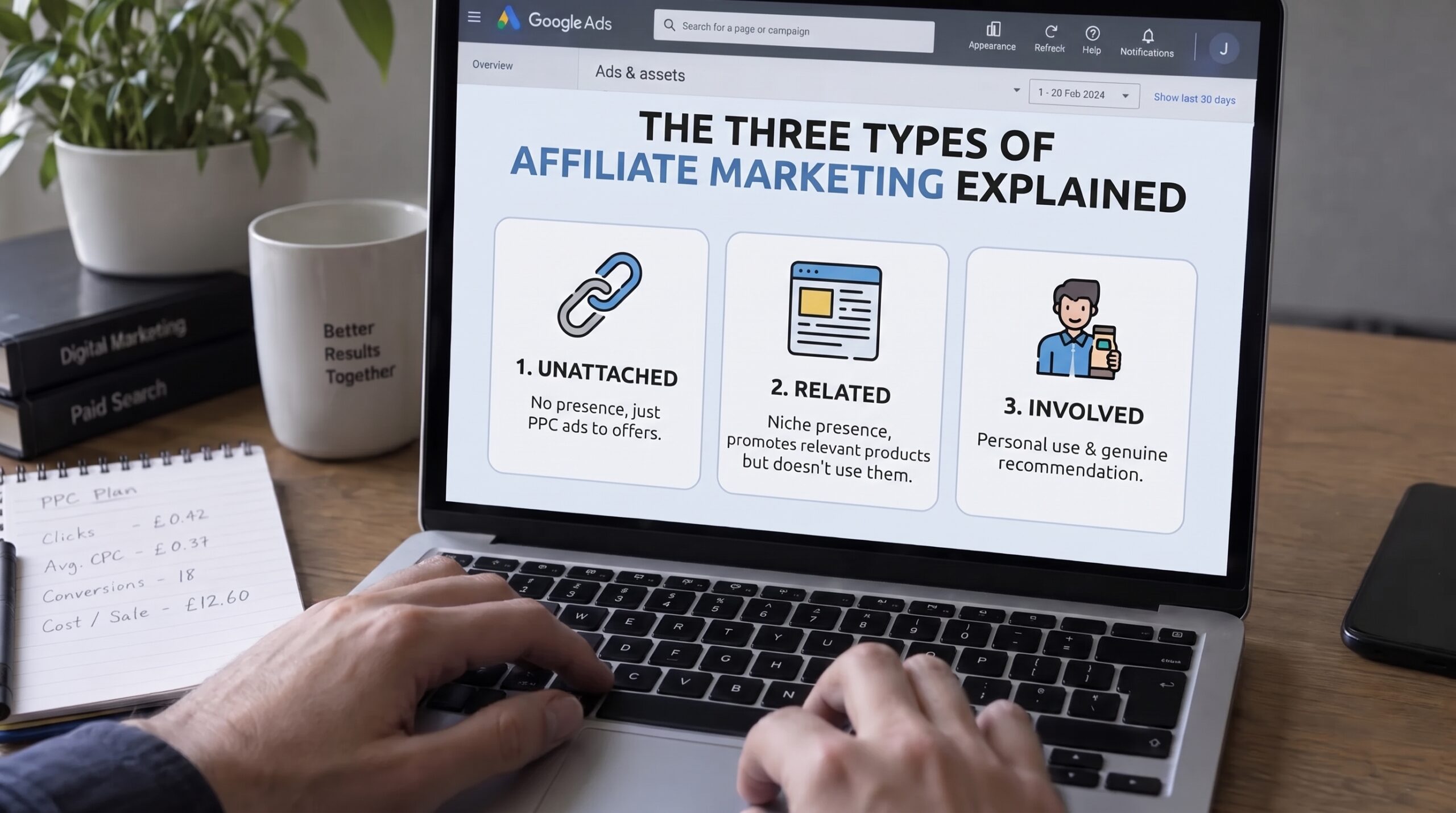
Passive income sounds like a fantasy until you understand the mechanics behind it. To build passive income affiliate marketing, the basic process involves picking a focused niche, creating evergreen content, joining the right affiliate programs, and driving consistent traffic to that content so commissions roll in long after you hit publish.
The good news: you do not need a big following, a large budget, or any technical background to start. What you do need is a clear system and realistic expectations. Once you create content with affiliate links, it can generate passive income, an SEO blog post or YouTube video can continue earning commissions months or years after publication. That compounding effect is the engine behind every successful affiliate business.
Key Takeaways
-
The market is growing fast and the timing is right: US affiliate spend is on pace to hit $13.81 billion in 2026, up 11.3% from $12.42 billion in 2025, and that spend is expected to influence around $241 billion in US ecommerce sales, according to an eMarketer forecast. Get in now before your niche becomes crowded.
-
Niche focus beats broad topics every time: Affiliate publishers with niche authority achieve conversion rates of 4 to 6%, nearly double broader lifestyle sites. Pick one specific audience and serve them deeply before expanding.
-
Traffic is the real bottleneck: Almost half of affiliate marketers cite getting traffic as their biggest challenge, according to Authority Hacker. Plan your traffic strategy before you pick your programs.
-
Income takes time, plan your runway accordingly: Most affiliate marketers see their first meaningful commissions between 6 months and 1 year after starting, as this timeline reflects the reality of building an audience, establishing trust, and creating content that ranks in search engines. Budget 12 months of effort before judging results.
-
Email is your biggest passive leverage point: Email marketing delivers an astounding $36 for every $1 spent, and consumers are three times more likely to make a purchase from email compared to social media. Start building your list from day one.
Quick-Start Prioritization Framework
| Strategy | Best For | Effort Level | Time to Results |
|---|---|---|---|
| SEO blog content | Total beginners, no budget | Low (time-intensive) | 3-9 months |
| YouTube channel | Visual communicators | Medium | 2-6 months |
| Email list building | Anyone with existing content | Low-Medium | 1-3 months |
| Pinterest traffic | Visual niches (food, DIY, fashion) | Low | 1-4 months |
| Social media (Instagram/TikTok) | Creators with camera comfort | Medium | 1-3 months |
Start here if you’re:
-
A complete beginner with no audience: SEO blog content, lowest cost, most durable traffic over time.
-
A visual creator or camera-confident person: YouTube, combines SEO with personality and builds trust faster.
-
Someone who already publishes any content: Email list, highest ROI of any channel once you have even a small following.
Step 1: Choose a Profitable Niche You Can Stick With
This is where most beginners lose before they even start. They either chase money in a niche they know nothing about, or they pick a passion with no commercial demand. The winning formula sits in the middle.
Match Interests to Market Demand
Choosing the right niche is arguably the most critical decision in your affiliate marketing journey. Your niche should satisfy three essential criteria: it must align with your genuine interests and expertise, address real problems that people are willing to pay to solve, and demonstrate sufficient market demand and profitability.
In my experience, the fastest way to validate a niche is to spend 30 minutes on Google Trends and Reddit. Search your topic idea on Google Trends and check whether search volume is stable or growing. Then visit the relevant subreddit and look at what questions people ask repeatedly, those are your future content titles.
Aim for Evergreen, Not Seasonal
Look for profitable niches with a range of monetizable products and services, and ensure the niche is evergreen, meaning it will have consistent demand over time. Trends come and go. A post about “best protein powder for beginners” will earn commissions for years. A post about a specific viral product from last summer will not.
Pro Tip: Validate commercial intent before committing. Search your niche keyword followed by “best,” “review,” or “vs.” If you see ads on the results page, brands are paying for that attention, which means affiliate programs exist and buyers are in the market.
Step 2: Join the Right Affiliate Programs
Once you have a niche, you need programs that match your audience’s buying habits and your commission expectations. I’ve found that beginners waste months promoting low-commission products when one pivot to a higher-value program could triple their earnings for the same traffic.
Programs Worth Starting With
Amazon Associates is often the very first program beginners join, and for good reason: approval is fast, and you can link to millions of products your audience already trusts. Commissions are modest, generally ranging from 1% to 10% depending on category, and the cookie window is short at 24 hours. It’s a great low-friction way to start earning while you learn the basics of affiliate linking and disclosure.
For higher commissions early on, consider digital product networks. ClickBank specializes in digital products like online courses, eBooks, and software, and it’s known for offering some of the highest commission rates around, often 30-75% per sale. Approval is nearly instant, making it very accessible for beginners. Just be selective about which products you promote, since quality varies across the marketplace.
For recurring income, where a single referral pays you month after month, Kit offers 50% commission for 12 months and HubSpot offers 30% recurring for a year, making them powerful options in the marketing and creator economy niches.
Pro Tip: Pick two to three programs maximum when starting out. Spreading your links across 10 different programs confuses your audience and makes it impossible to track what actually converts. Master one or two offers first, then expand.
Step 3: Build a Content Platform That Works While You Sleep
Your content platform is the asset that generates passive income. Unlike a social post that disappears in 24 hours, a well-optimized blog article or YouTube video keeps working long after you create it.
Why a Blog Is the Foundation
Search engine traffic is the most valuable source for affiliate blogs because it brings in people who are already looking for information or ready to buy. The most successful affiliate marketing blogs rely heavily on SEO to drive consistent, targeted traffic that converts.
Start with a self-hosted WordPress site. It gives you full control over your content, your links, and your monetization, something you never get on a third-party platform. From there, your content strategy comes down to four core formats: product reviews, comparison articles (“X vs Y”), tutorials that use the product as part of the solution, and informational posts that build topical authority in your niche.
Optimize Every Post From Day One
Use your primary keyword in the first 100 words, in the H1, and in at least one H2. Add a comparison table for any “best of” post; it triples time-on-page. Place your affiliate call-to-action button both mid-content and just before the conclusion.
This structure works because it mirrors how real buyers read. They scan headings, look for a recommendation table, and then look for a reason to act.

Step 4: Drive Consistent Traffic to Your Affiliate Content
Publishing great content is half the battle. The second half is getting people to actually see it. Traffic is the challenge most often cited by affiliate marketers, and for good reason, without visitors, no one clicks your links.
SEO: Your Long-Term Passive Traffic Engine
SEO and affiliate marketing work together as a long-term growth engine. The content you optimize today can generate passive traffic and commissions for years. Focus on long-tail keywords first, phrases with three to five words that signal buying intent. “Best budget laptop for college students” will convert better than “laptops” because the searcher already knows what they want.
Use long-tail keywords in titles URLs, and subheadings. Write 2,000-plus word posts for depth. Longer posts tend to rank higher because they answer more of the searcher’s questions in one place, reducing the need to click back to Google.
Build Your Email List in Parallel
This is the most underrated move a beginner can make. Building an email list is a foundational strategy for generating high-yield passive income. Unlike SEO traffic, which fluctuates with algorithm changes, your email list is an asset you own outright.
Building an email list requires creating a lead magnet, such as a free eBook or checklist, that encourages visitors to opt in to your list. Once someone subscribes, you can send them affiliate recommendations through automated sequences that run without any ongoing effort from you. That is passive income in its truest form.
Pro Tip: Set up a simple three-email welcome sequence the moment you launch your opt-in. Email 1 delivers the lead magnet. Email 2 introduces your story and one recommended resource (your best affiliate offer). Email 3 provides a genuinely useful tip with a soft nudge back to that offer. Automation handles everything after that.
Step 5: Avoid the Mistakes That Kill Most Beginners
Most people who fail at affiliate marketing do not fail because the model does not work. They fail because of a handful of predictable, avoidable errors.
Promoting Too Many Products Too Early
Spreading commissions across 15 different programs sounds like diversification. In practice, it means you cannot collect enough data to know what works. Pick one to two offers, create a cluster of content around them, and optimize for conversion before adding more programs.
Ignoring Your Legal Disclosure Obligations
This one can end your business before it starts. Forgetting or ignoring affiliate disclosures can damage your audience’s trust and even put you at legal risk. The Federal Trade Commission (FTC) requires affiliates to clearly disclose their relationships with brands whenever a commission might be earned from a purchase.
Putting the disclosure at the bottom of a post is the most frequent mistake. Readers do not scroll that far, and the FTC knows it. If you have been placing your disclosure at the end of posts, move it to the top.
The fix is simple. Add a one-sentence disclosure at the very top of every piece of content containing affiliate links. Something like: “This post contains affiliate links. I may earn a commission if you purchase through them, at no extra cost to you.” That sentence protects you legally and builds trust with your audience at the same time.
Quitting Before Traffic Compounds
A realistic timeline shows that foundation work happens in months one to two, first traffic and small commissions appear between months two and four (earning $0 to $100/month), consistency with compounding traffic and predictable commissions arrives between months four and twelve ($100 to $1,000/month), and full-time income potential emerges between months 18 and 36.
Most people quit during months two through four, exactly when the SEO engine is warming up. Commit to a 12-month runway before evaluating whether the model is working.

Frequently Asked Questions
How much money can a beginner realistically make with affiliate marketing?
Top performers earn $100K or more while many beginners earn little to nothing in their first 6 to 12 months. A realistic target for your first year is $500 to $1,000 per month, assuming you publish consistently and follow an SEO strategy. Industry data shows that affiliate marketers with 3 or more years of experience earn 9.45 times more than beginners, which means the biggest factor in your income is simply how long you stay committed.
Do I need a website to start affiliate marketing?
A website gives you the most control and the most durable passive income potential, but it is not the only option. You can also start with a YouTube channel, a Pinterest account, or an email newsletter. That said, combining all of these with a central blog gives you compounding advantages, your blog content drives SEO traffic, your email list retains that traffic, and social channels amplify it.
How do I choose affiliate products that actually convert?
Focus on products you have personally used or can genuinely vouch for. Then check that the product has clear commercial demand, meaning people are already searching for it, and that the commission structure is worth your traffic. Experienced affiliate marketers suggest choosing products with a higher price tag, since there is little difference in how you promote a cheap or expensive product, and the more expensive one leaves you with a profit margin that allows you to invest in content promotion.
Is affiliate marketing truly passive, or does it require constant work?
The income becomes passive once the content and systems are in place, but building those systems requires active work upfront. Think of it like planting an orchard; you do significant work for 12 to 18 months, and then the trees produce fruit with minimal ongoing effort. SEO and affiliate marketing work together as a long-term growth engine, and the content you optimize today can generate passive traffic and commissions for years.
How important is FTC disclosure compliance?
Critical. Many content creators make critical errors when writing affiliate disclosures that can result in FTC violations and loss of audience trust. One of the most common mistakes is burying the disclosure in footer text or requiring readers to click multiple times to find it. The FTC has explicitly stated that “there’s no effective disclosure if people don’t see it,” making visibility absolutely essential.
Your Next Step: Start Before You Feel Ready
Affiliate marketing rewards people who take action over people who wait for perfect conditions. The framework above gives you everything you need to begin: a niche selection process, a short list of beginner-friendly programs, a content strategy, a traffic plan, and an understanding of the compliance rules that protect you legally.
I’ve found that the biggest difference between people who build real passive income and people who stay stuck in research mode is simply starting with one piece of content and one affiliate program. Master that before adding more.
For deeper guides on list building, traffic strategies, and content frameworks specifically designed to generate affiliate commissions on autopilot, explore The ClickBank Profit Club.
If you’re over 50 and wondering whether it’s too late to start, this walkthrough of beginner-friendly income streams shows exactly why starting now, before you feel fully ready, is the right move.
Sources
-
Affiliate Marketing: How It Works in 2026, Shopify. Passive income potential and commission examples. https://www.shopify.com/blog/affiliate-marketing
-
35+ Affiliate Marketing Statistics for 2026, OptinMonster. Beginner income data and earnings distribution. https://optinmonster.com/affiliate-marketing-statistics/
-
Affiliate Marketing Statistics 2026, NewMedia. Niche authority conversion rates and influencer data. https://newmedia.com/blog/affiliate-marketing-statistics
-
Affiliate Marketing Statistics 2026, BackToFrontShow. US spend and ecommerce influence data. https://backtofrontshow.com/affiliate-marketing-statistics/
-
71 Affiliate Marketing Statistics 2026, EntrepreneursHQ. Traffic challenges and ROI data. https://entrepreneurshq.com/affiliate-marketing-statistics/
-
How Do I Start Affiliate Marketing?, PostAffiliatePro. Niche selection criteria for beginners. https://www.postaffiliatepro.com/faq/how-to-start-affiliate-marketing/
-
9 Best Niches for Affiliate Marketing, GetResponse. Product pricing strategy for affiliates. https://www.getresponse.com/blog/best-affiliate-niches
-
Best Affiliate Programs for Beginners 2026, SideHustleMastery. Amazon Associates and ClickBank overview. https://sidehustlemastery.com/best-affiliate-programs-for-beginners/
-
75+ Best Affiliate Programs 2026, DevKantKumar. Recurring commission program data. https://devkantkumar.com/blog/best-affiliate-programs-2026
-
Affiliate SEO Strategies for 2026, Bluehost. Long-term SEO and passive traffic strategy. SEO and affiliate marketing work
-
How to Start an Affiliate Marketing Blog, Host-Stage. SEO traffic and content structure for affiliate blogs. https://www.host-stage.net/case-study/digital-marketing/how-to-create-a-blog-for-affiliate-marketing/
-
Complete Affiliate Marketing for Beginners 2026, BloggingDen. On-page SEO keyword placement tactics. https://bloggingden.com/affiliate-marketing-for-beginners/
-
How to Build an Email List for Affiliate Marketing, eMercury. Email ROI and conversion rate data. https://www.emercury.net/blog/email-marketing-tips/how-to-build-an-email-list-for-affiliate-marketing/
-
Build Email List High-Yield Passive Income Idea, FortuneInBox. Email list as passive income foundation. https://fortuneinbox.com/build-email-list-high-yield-passive-income-idea/
-
7 Common Affiliate Marketing Mistakes, Affiliates Help (Automattic). FTC disclosure requirements and best practices. https://affiliateshelp.automattic.com/2026/03/18/common-affiliate-marketing-mistakes/
-
Affiliate Link Disclosure: What You’re Required to Say, MattMcWilliams.com. Disclosure placement and FTC compliance guidance. https://www.mattmcwilliams.com/affiliate-disclosure/
-
What Should I Write in an Affiliate Disclosure?, PostAffiliatePro. FTC visibility requirements and common mistakes. https://www.postaffiliatepro.com/faq/what-should-i-write-in-affiliate-disclosure/
-
How Long Does Affiliate Marketing Take to Work?, VivianAgency. Realistic income timeline by traffic source. https://www.vivianagency.com/how-long-does-affiliate-marketing-take-to-work/
-
How Long Does It Take to Make Money with Affiliate Marketing?, Digistore24. Experience-based income multiplier data. https://www.digistore24.com/blog/affiliate-marketing-experience/
-
How Long Does Affiliate Marketing Take? A Realistic Timeline, InternetMoneyPro. Phase-by-phase income timeline. https://internetmoneypro.com/blog/how-long-does-affiliate-marketing-take/
Share This Post and Join the Conversation
If this guide gave you a clearer picture of how to start building passive income with affiliate marketing, share it on social media so someone else in your circle can benefit too. And if you have a question about any of the steps above, or a win you want to share, drop a comment below. Every question gets a real answer.
Share via: